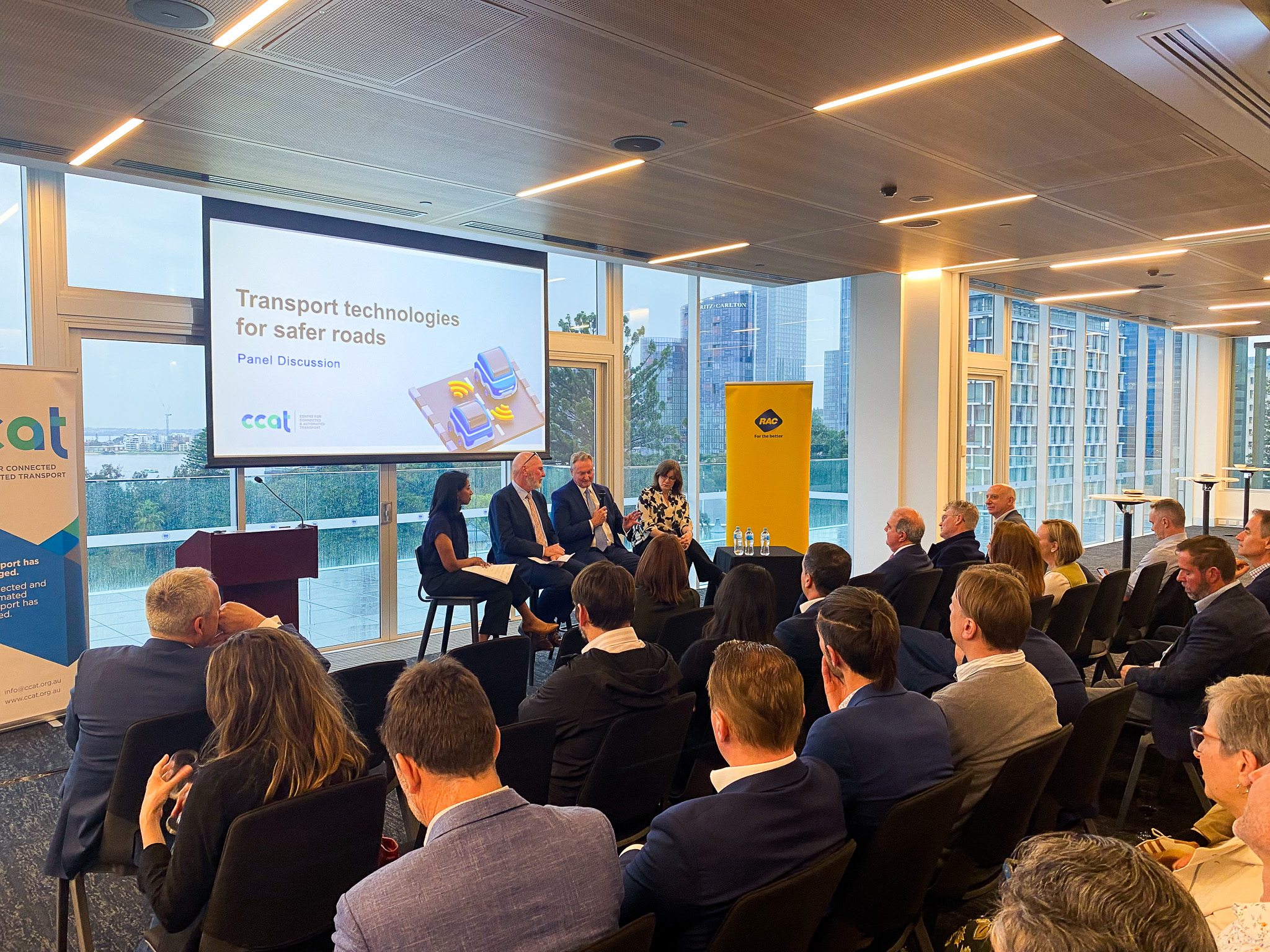
In May 2026, CCAT hosted a webinar examining how Australia can maximise the benefits of connected and automated transport while proactively addressing risks and unintended consequences.
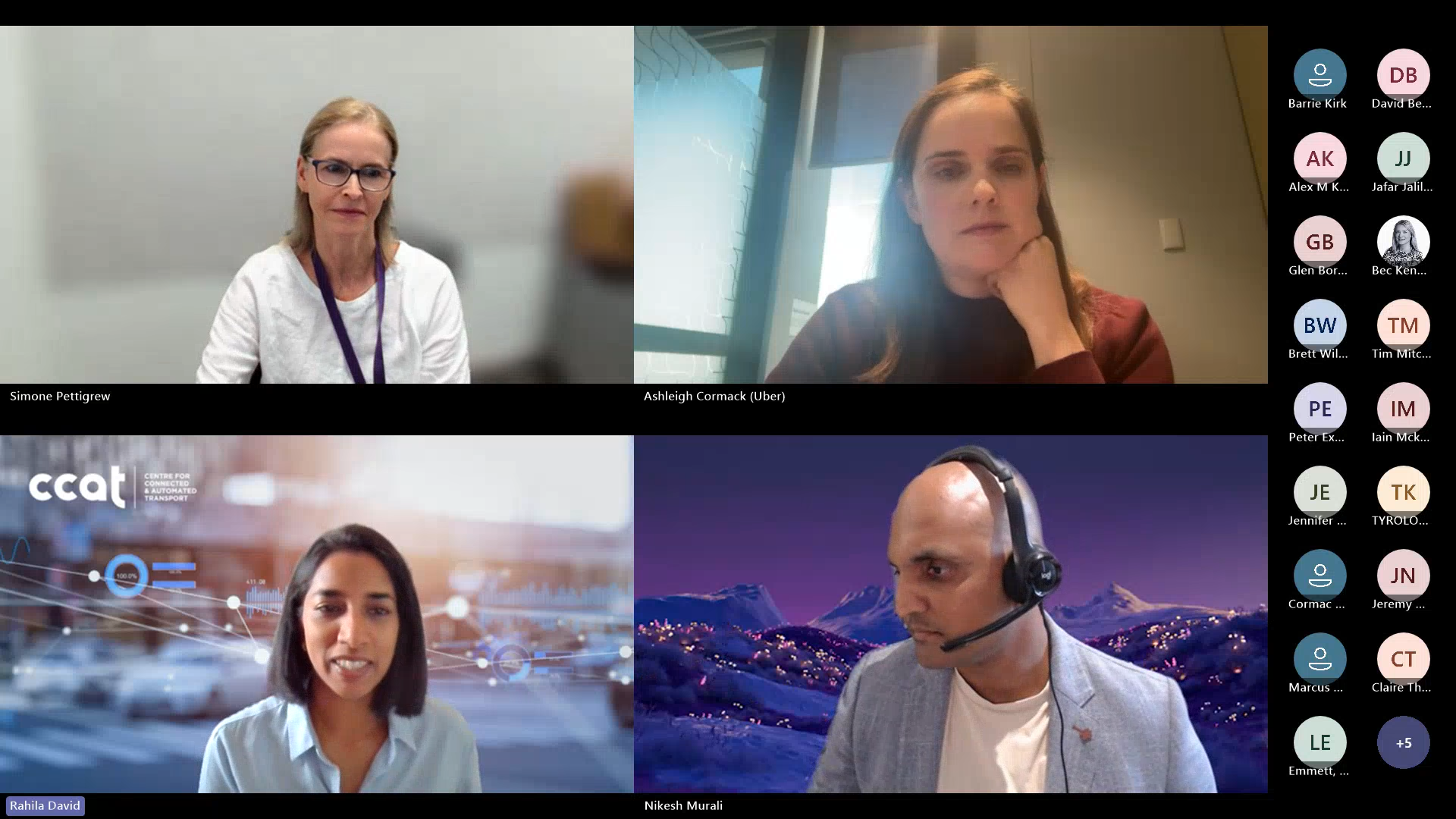
The discussion built on insights from CCAT’s National Future Transport Summit, which engaged more than 100 organisations over two years to develop recommendations focused on maximising safety, productivity and sustainability outcomes from connected and automated transport. Moderated by CCAT Executive Director Rahila David, the panel featured Professor Simone Pettigrew (The George Institute for Global Health), Ashleigh Cormack (Uber) and Nikesh Murali (The NRMA). Key discussion topics from the webinar included public trust, workforce transition, equity, sustainability, regulation, behavioural impacts and the importance of early planning.
Panellists highlighted significant opportunities for connected and automated transport over the next decade. Beyond safety improvements, automation is closely linked with electrification, offering a pathway to accelerate the transition to low-emissions transport while modernising urban mobility systems. Connected and automated transport could also transform access to mobility, particularly by improving first- and last-mile connections. This has strong implications for older Australians, people with disabilities and regional communities. The technology can also deliver broader public health benefits through reduced road trauma and greater social and economic participation.
A central focus was the need to manage risks early. Reference was made to Uber’s Unlocking the Potential of Autonomy, which identifies the need to address challenges such as workforce disruption, congestion driven by induced demand, and unequal access.
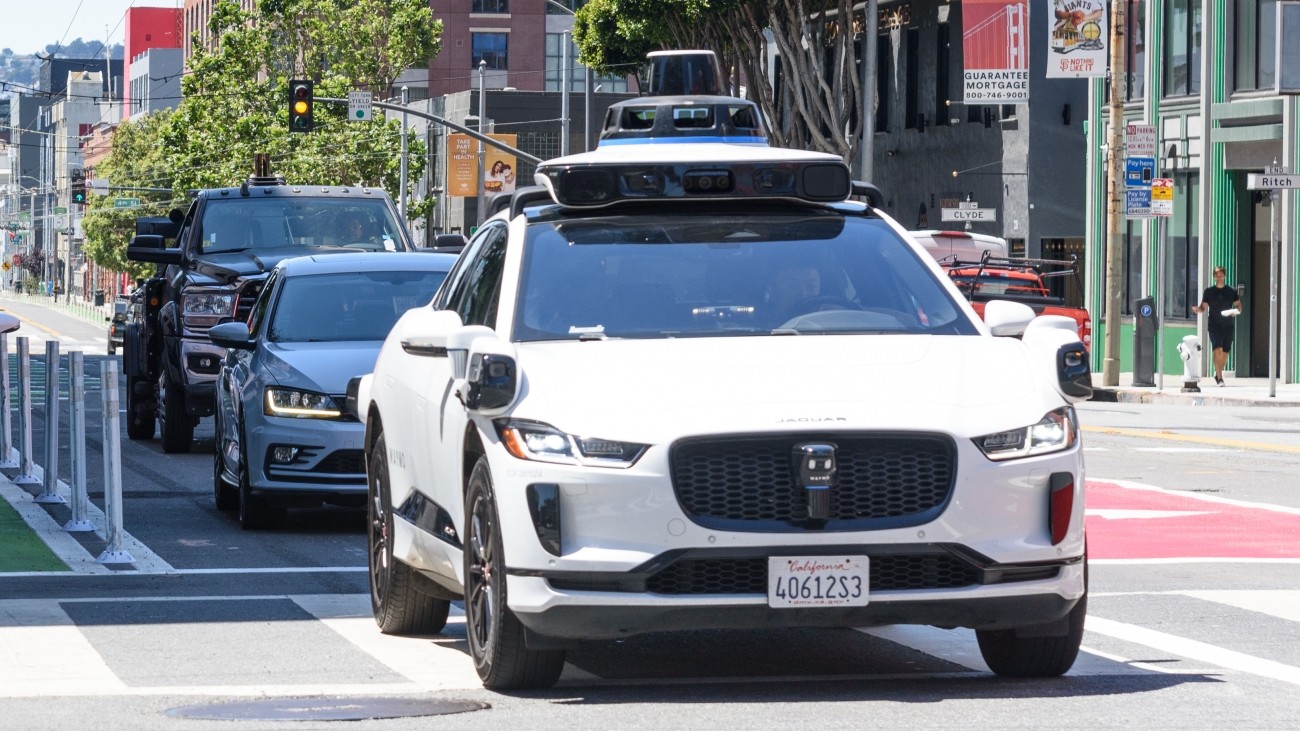
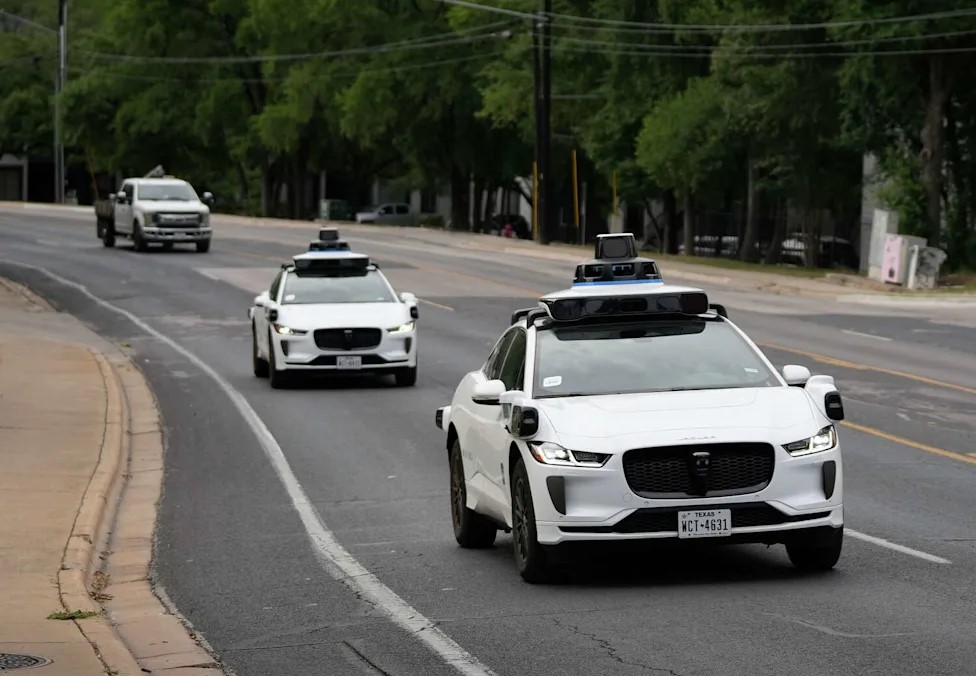
International experience demonstrates these risks. In cities like San Francisco, autonomous vehicle deployment has concentrated in wealthier urban areas, raising concerns about equity. While Australia’s outcomes may differ due to local travel behaviour, panellists emphasised that sustained investment in public and active transport remains critical regardless of automation.
Other key issues that were explored included:
The discussion identified several immediate priorities for Australia as connected and automated transport technologies continue to evolve. These included strengthening collaboration and information sharing across sectors, building public trust through transparency and honest communication, expanding Australian-specific testing and research, introducing early regulation for emerging services, planning proactively for workforce transition, and improving coordination between government, industry and researchers. Research into advanced driver assistance systems (ADAS) was also highlighted as an important focus area, particularly given growing concerns about how some existing vehicle automation technologies may influence driver behaviour and safety outcomes.
The webinar concluded that connected and automated transport offers significant potential to improve safety, sustainability, accessibility and productivity. However, achieving these benefits will require proactive and coordinated action.
Panellists emphasised that the transition is not purely technological, but also social, economic and behavioural. Success will depend on building trust, ensuring transparency, fostering collaboration and prioritising inclusive deployment.
RahilaDavid closed by acknowledging National Road Safety Week and highlighting thelife-saving potential of these technologies.
Watch the webinar recording here:
Have an idea for a future webinar or event? contact info@ccat.org.au


We’re here to help. If you’d like to learn more about CCAT, explore partnership or membership opportunities, or simply have a question about our work, we’d be happy to hear from you. Reach out to connect with our team and discover how you can be part of shaping the future of transport in Australia and New Zealand.