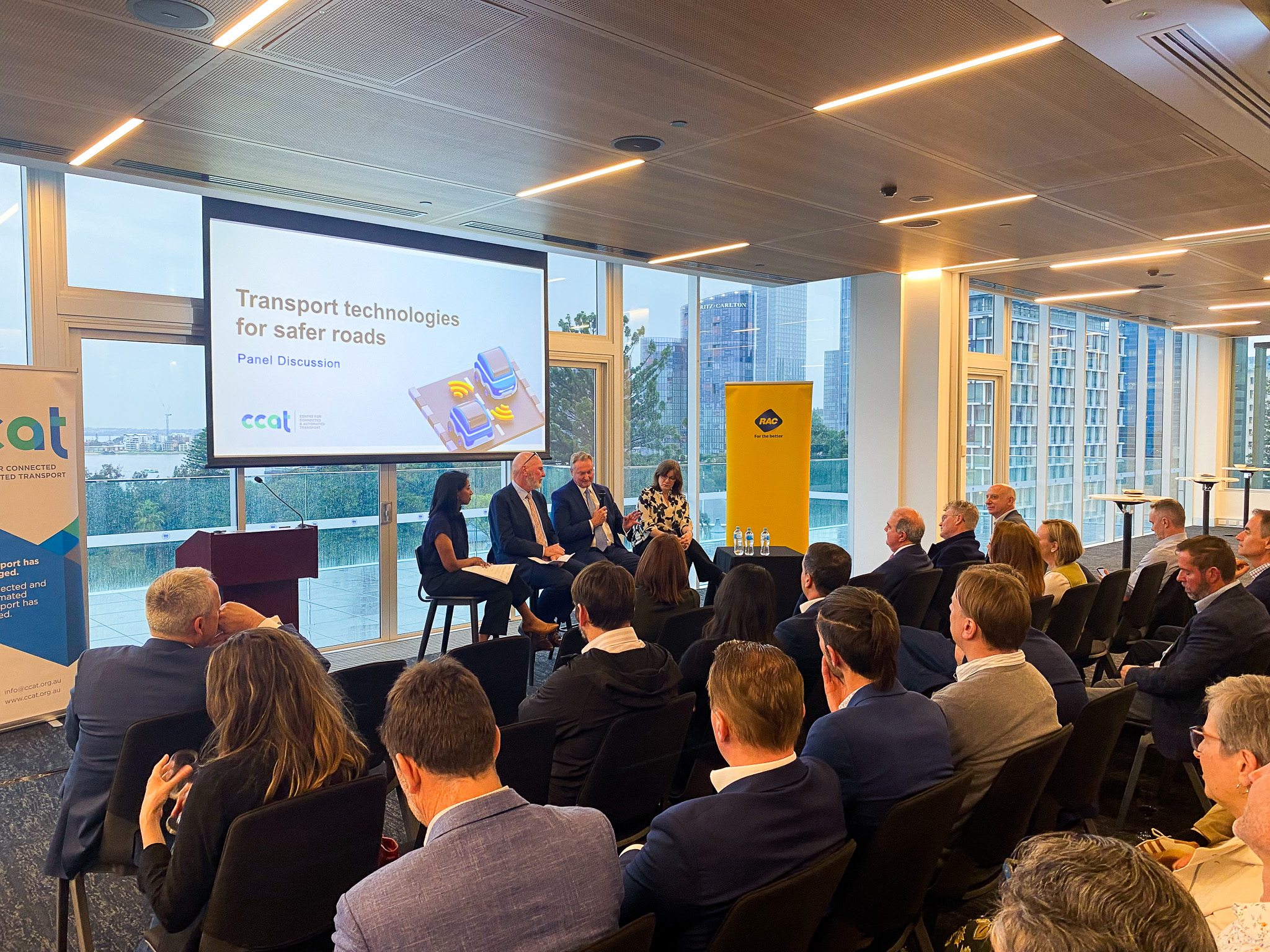


In June 2026, CCAT hosted a webinar exploring how Australia can rethink transport infrastructure to meet growing demand while preparing for the widespread deployment of digital, connected and automated technologies.
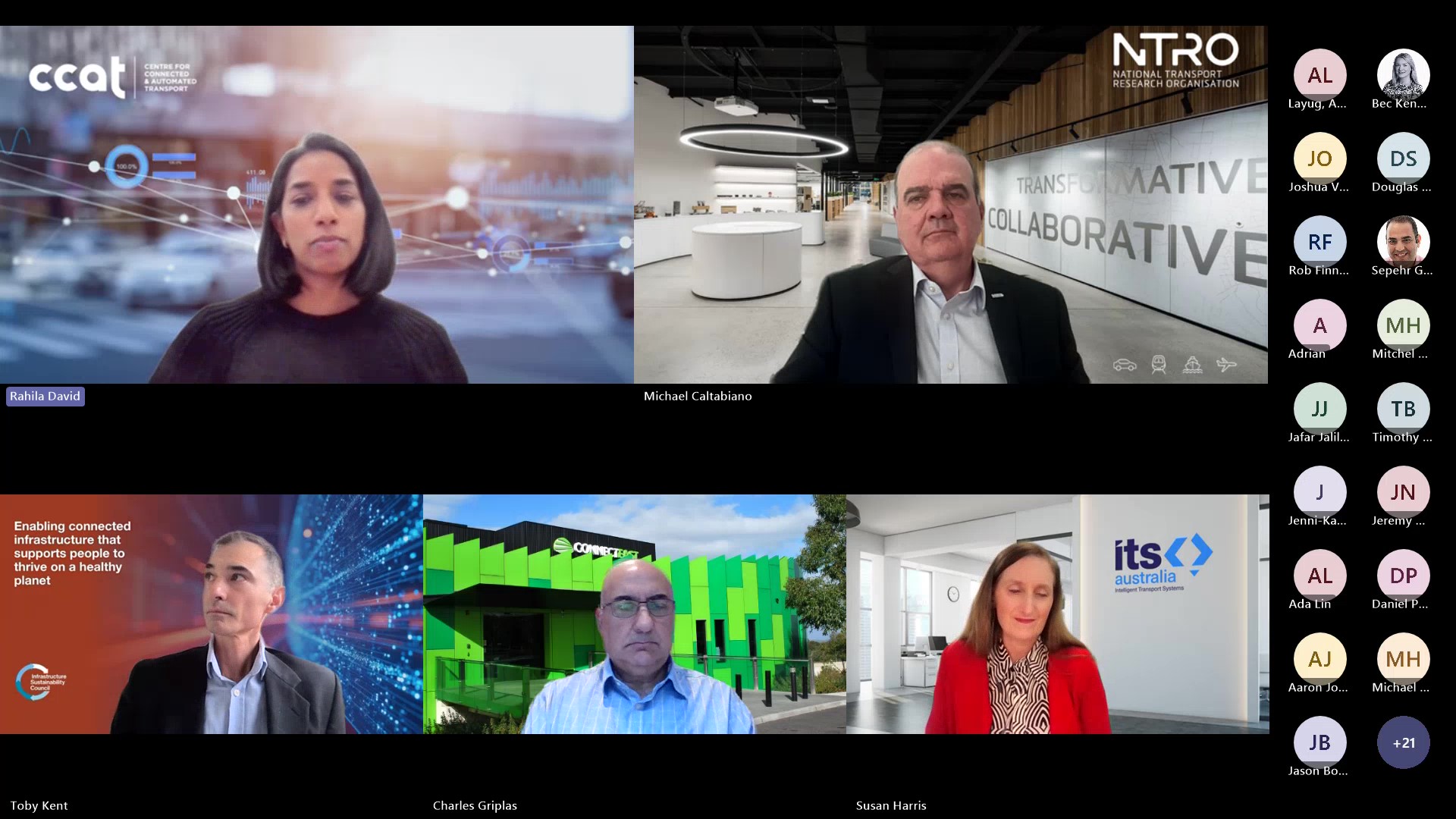
The discussion continued the conversation initiated through CCAT's National Future Transport Summit, which brought together more than 100 organisations to develop recommendations for maximising the safety, productivity and sustainability benefits of connected and automated transport. Moderated by ConnectEast CEO Charles Griplas, the panel featured Michael Caltabiano (CEO of the National Transport Research Organisation), Susan Harris (CEO of ITS Australia) and Toby Kent (CEO of the Infrastructure Sustainability Council). The discussion touched on a range of topics including digital infrastructure, connected and automated vehicles, artificial intelligence, sustainability, national coordination and the respective roles of government and industry in future-proofing Australia's transport network.

A consistent theme throughout the discussion was that the delivery of fit-for-purpose transport infrastructure and operations will be driven by data.
Panelists highlighted the growing importance of integrating data from multiple sources, including connected infrastructure and vehicles, to better understand network performance and support more informed investment decisions. Artificial intelligence will increasingly play a role in analysing these large datasets, enabling transport operators to improve congestion management, optimise maintenance, respond more effectively to incidents and deliver safer, more efficient transport outcomes.
The discussion reinforced that future infrastructure investment must focus not only on building new assets, but also on making better use of the infrastructure that already exists through richer, real-time information.
The panel agreed that digital infrastructure is rapidly becoming as important as physical infrastructure.
Reliable connectivity will underpin the next generation of transport, enabling communication between vehicles, infrastructure and cloud-based systems. Panellists noted that while connected vehicle technology is advancing rapidly, gaps remain in Australia's digital infrastructure, particularly along major transport corridors.
High-quality, nationally consistent data will also be critical as connected and automated vehicles become more common, allowing vehicles to safely respond to changing speed limits, hazards, roadworks and traffic conditions in real time.

Australia has developed a strong reputation for transport innovation and successful pilot projects, but panellists agreed that greater effort is needed to scale these initiatives nationally.
Drawing on examples from Japan and the United States, the discussion highlighted the value of long-term implementation strategies, nationally harmonised standards and stronger collaboration between governments and industry. Speakers noted that many connected and automated vehicle applications are already operating overseas, particularly in freight, providing valuable lessons that Australia can build upon while accelerating local deployment.
The panel also emphasised that Australia must move beyond fragmented, state-based approaches and establish nationally coordinated pathways for connected and automated transport.
Future-proofing transport infrastructure requires a broader, systems-based approach that considers housing, land use, sustainability, resilience and social equity as part of transport planning.
Panellists discussed the importance of using infrastructure investment to improve long-term community outcomes while responding to major challenges including population growth, constrained public funding and climate change. Better integration between transport planning and broader government policy was identified as essential to delivering infrastructure that continues to provide value for future generations.
Climate resilience and sustainability also featured prominently throughout the discussion. Panellists highlighted the opportunity to reduce emissions, improve resource efficiency and deliver more resilient infrastructure through better planning, data and decision-making.
The discussion explored how governments and the private sector each have an important role to play in delivering Australia's transport future.
Government was identified as being responsible for establishing clear national direction, consistent regulation and enabling policy settings, while the private sector will continue to drive much of the innovation, technology development and service delivery. Panellists emphasised that stronger collaboration between government, industry and researchers will be essential to accelerate deployment while maintaining public confidence and safety.
The discussion identified some immediate priorities for Australia as transport infrastructure continues to evolve. These included improving digital connectivity across major transport corridors, integrating transport data to support better decision-making, accelerating nationally coordinated deployment of connected and automated technologies, strengthening collaboration between government and industry, adopting long-term systems thinking in infrastructure planning and ensuring sustainability and resilience are embedded throughout future investment decisions.
The webinar concluded that Australia's transport future will depend on far more than new infrastructure alone.
Panellists agreed that data, digital connectivity and national leadership will underpin the next generation of safer, more productive and more sustainable transport systems. While connected and automated technologies continue to advance rapidly around the world, Australia has an opportunity to learn from international experience while accelerating its own deployment through coordinated action and long-term planning.
In closing, the panellists reflected on each of their single most important requirement for future-proofing Australia's transport system, citing national leadership, secure data and connectivity, and infrastructure decisions grounded in climate science. Together, these priorities provide a roadmap for building transport networks that are ready for the challenges and opportunities of the decades ahead.
View the recording:
Have an idea for a future webinar or event? contact info@ccat.org.au


We’re here to help. If you’d like to learn more about CCAT, explore partnership or membership opportunities, or simply have a question about our work, we’d be happy to hear from you. Reach out to connect with our team and discover how you can be part of shaping the future of transport in Australia and New Zealand.